

EPS Bead Transfer Lines
| Specification | Value |
|---|---|
| Conveying Method | Pneumatic |
| Interior Surface | Smooth, low-friction |
| Configuration | Block molding and shape molding layouts |
Key Features
- Pneumatic conveying for gentle, continuous bead transport
- Smooth interior pipe surfaces to prevent bead damage
- Optimized routing with gradual bends to preserve bead quality
- Configurations for both block molding and shape molding plants
- Engineered layout design matched to each plant's production flow
- Compatible with automated silo systems and molding machines
Overview
Bead transfer lines are the pneumatic conveying pipelines that move expanded EPS beads from one process stage to the next: from the pre-foaming machine to curing silos, from silos to block form machines, or from silos to shape molding machines. While they may appear to be simple plumbing, the design and routing of these lines has a direct impact on bead quality and, by extension, on the quality of the finished product.
Poorly designed transfer systems can crush, deform, or statically charge beads in transit, leading to density inconsistencies and surface defects in molded products. Properly engineered transfer lines prevent these problems and ensure that beads arrive at the molding stage in the same condition they left the silo.
Design Principles
The interior surfaces of the transfer pipes are smooth and low-friction, minimizing contact damage as beads travel through the system. Pipe routing avoids sharp turns, tight radii, and abrupt changes in direction that create turbulence and mechanical stress on the beads. Where direction changes are necessary, gradual sweeping bends are used to maintain gentle flow.
Air velocity, pipe diameter, and blower capacity are engineered to match the bead volume and density being conveyed. Under-sized systems create excessive velocity and bead damage; over-sized systems waste energy and may not convey reliably. The correct balance depends on the specific production volumes and distances involved.
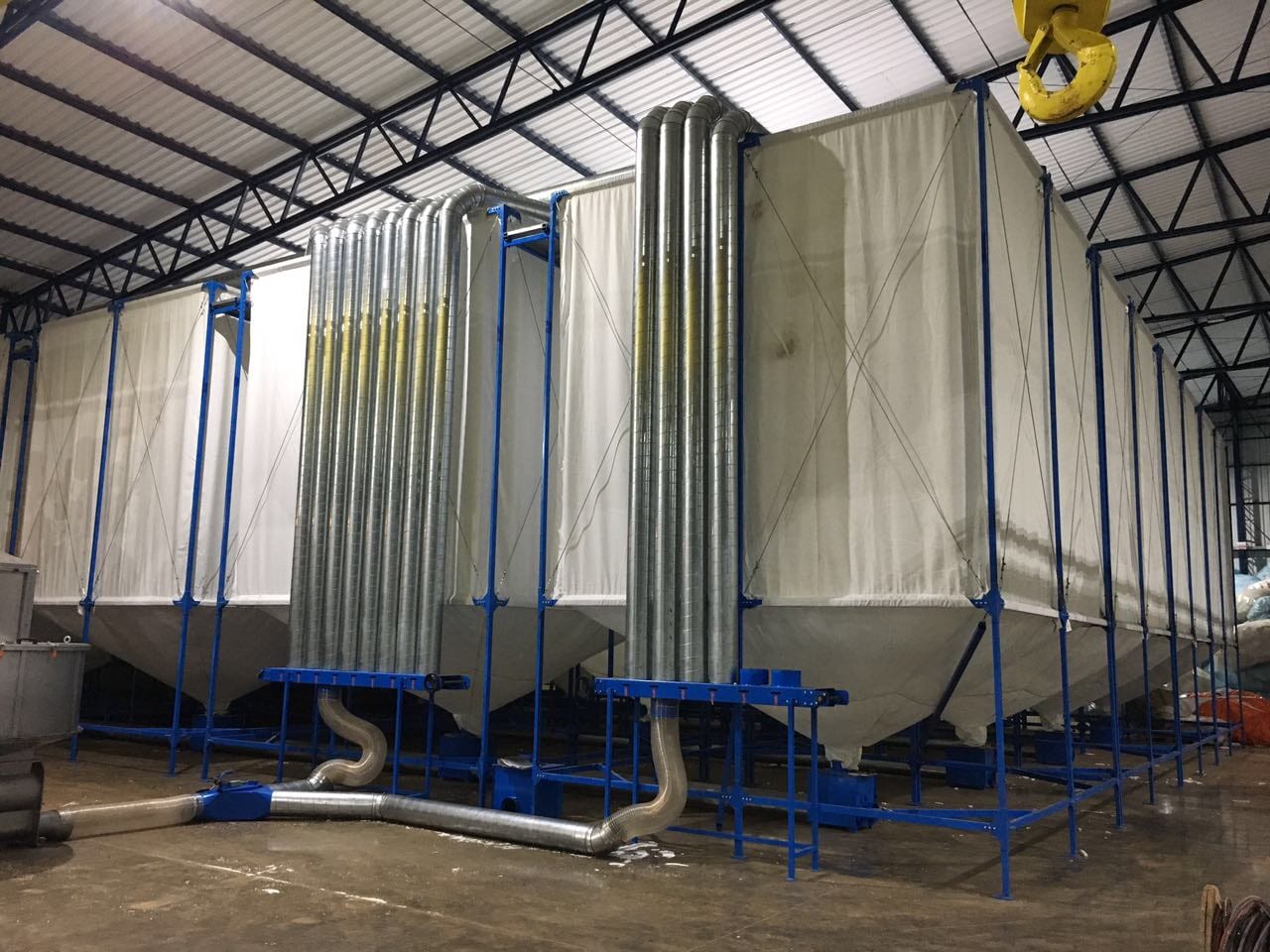
Configurations
Transfer lines are available in configurations suited to both block molding and shape molding plant layouts. Block molding plants typically have simpler, more linear transfer paths from silos to one or more block form machines. Shape molding plants require more complex distribution networks, with branching lines feeding multiple molding machines from a shared silo bank.
In both cases, the transfer line layout is designed as part of the overall plant engineering, taking into account building dimensions, equipment positions, production flow, and future expansion requirements.
Why Transfer Lines Matter
It is common for plant operators to focus investment on the primary machines (pre-foaming, molding, cutting) and treat the transfer system as an afterthought. This can be a costly oversight. Bead damage during transfer reduces finished product quality, increases scrap rates, and may require higher raw material consumption to compensate. A well-engineered transfer line system protects the investment made in upstream and downstream equipment by delivering material in optimal condition.
Plan Your Transfer Line Layout
Share your plant layout and production requirements. We will design a transfer line configuration that delivers beads reliably and without quality loss.
Request Details